SaaS Management Tools for SMBs (2026): In-Depth Reviews
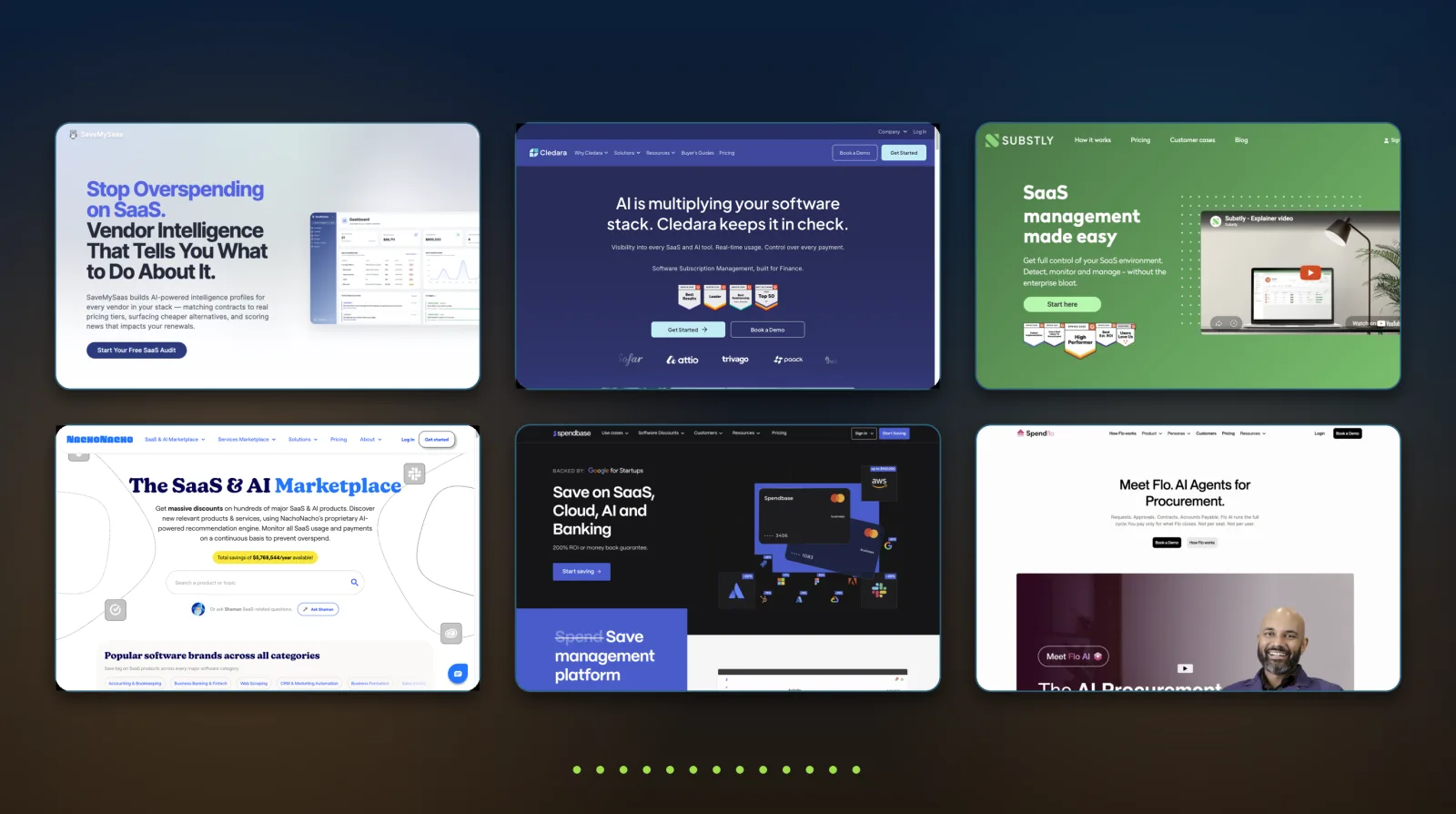
Six SaaS management tools, six honest trade-off stories. This is the in-depth half of our SMB comparison: every tool reviewed in full, with screenshots, pricing as of June 2026, the real catch behind each pitch, and a clear "choose this if / choose another if" so you make the right call the first time.
New here? Start with Part 1: the decision guide, which has the at-a-glance comparison table, the "best tool by use case" shortlist, and how to choose in 60 seconds. This page is the deep dive behind those picks.
Scope: tools realistically priced and scoped for SMBs and lean IT/finance teams (roughly 10–500 employees). Pricing and features were checked against public vendor pages and third-party sources in June 2026; confirm current details on each vendor's site before buying.
1. SaveMySaaS: best for AI renewal intelligence without payment rerouting
Best for: Lean SMB, founder, and finance-ops teams that want renewal protection, AI spend analysis, and vendor intelligence, plus a way to connect their SaaS data to AI tools.
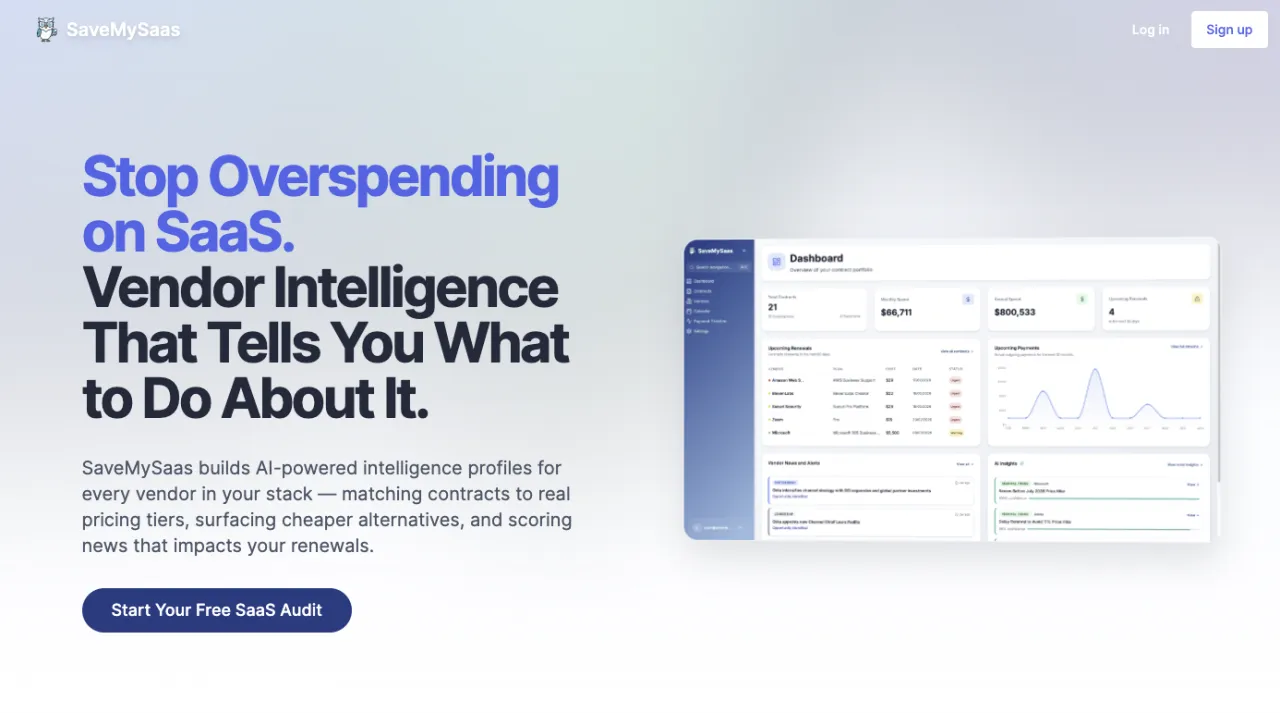
SaveMySaaS is an AI-native renewal and vendor-intelligence tool. You add subscriptions by forwarding renewal emails to a personal forwarding address, uploading a contract for AI extraction, or entering them manually. From there it tracks renewal dates (rolling monthly, quarterly, and annual dates forward automatically), generates AI spend analysis (executive summary, cost drivers, savings opportunities), and monitors vendor news with a personalized impact score for each of your vendors.
Three things genuinely set it apart in this comparison:
- It doesn't make you change how you pay. Card-led tools give you strong control for spend routed through their cards, but that means moving your payments onto their rails, and large, invoice-billed annual contracts are exactly the ones that fall outside a card model unless you add them by hand. SaveMySaaS tracks a contract no matter how it's paid, as long as you forward or enter it.
- AI vendor intelligence is a core feature, not a paid add-on. Daily vendor news with per-vendor impact scoring is included, where comparable tools either package AI separately or focus elsewhere. (Worth noting: several competitors are investing heavily here, so expect the gap to narrow over the next 12–18 months.)
- It's the only tool we reviewed with a public, self-serve API designed for AI agents. If you've searched for a SaaS management API for AI agents, this is the differentiator: personal access tokens, scoped permissions, and documented endpoints let you connect your SaaS data to Claude, ChatGPT, Cursor, or your own scripts, so an agent can list renewals, add a contract, or flag upcoming spend on your behalf. The full API documentation lives at savemysaas.com/for-agents.
It also uses negotiability-aware smart actions. Instead of flagging every renewal with the same generic "renegotiate" nudge, it prioritizes suggestions based on factors like vendor type and spend level. (Illustratively, it won't push you to renegotiate a sub-$1k/yr workspace plan, but it will flag a five-figure renewal where leverage actually exists.)
Pricing (as of June 2026): Free during the current launch plan, with no credit card required and no SSO deployment. Core tracking, AI spend analysis, vendor intelligence, and API access are all included. (We plan to make money through premium tiers later, not by selling your data. See the FAQ.)
Choose SaveMySaaS if:
- You want renewal alerts and AI spend insight quickly, without an enterprise rollout.
- Your SaaS is paid through a mix of card, ACH, invoice, and bank transfer.
- You don't want to move payments onto virtual cards.
- You'd rather not hand a third-party app read-access to your inbox, bank, or SSO directory.
- You want to expose your SaaS data to AI agents through an API.
Choose another tool if:
- You need automatic shadow-IT discovery from SSO, browser extensions, or bank feeds.
- You want to block charges or enforce budgets at the card level.
- You want a human team to negotiate your renewals.
For the full reasoning behind the no-email-connection design and how the API keeps manual entry low-effort, see the privacy section below.
Try it: SaveMySaaS is free to start at savemysaas.com, with no SSO deployment and no card required.
2. Cledara: best for card-based SaaS spend control
Best for: Finance-led SMBs and lower-mid-market teams (strong in the UK/EU) that want to control spend, not just observe it.
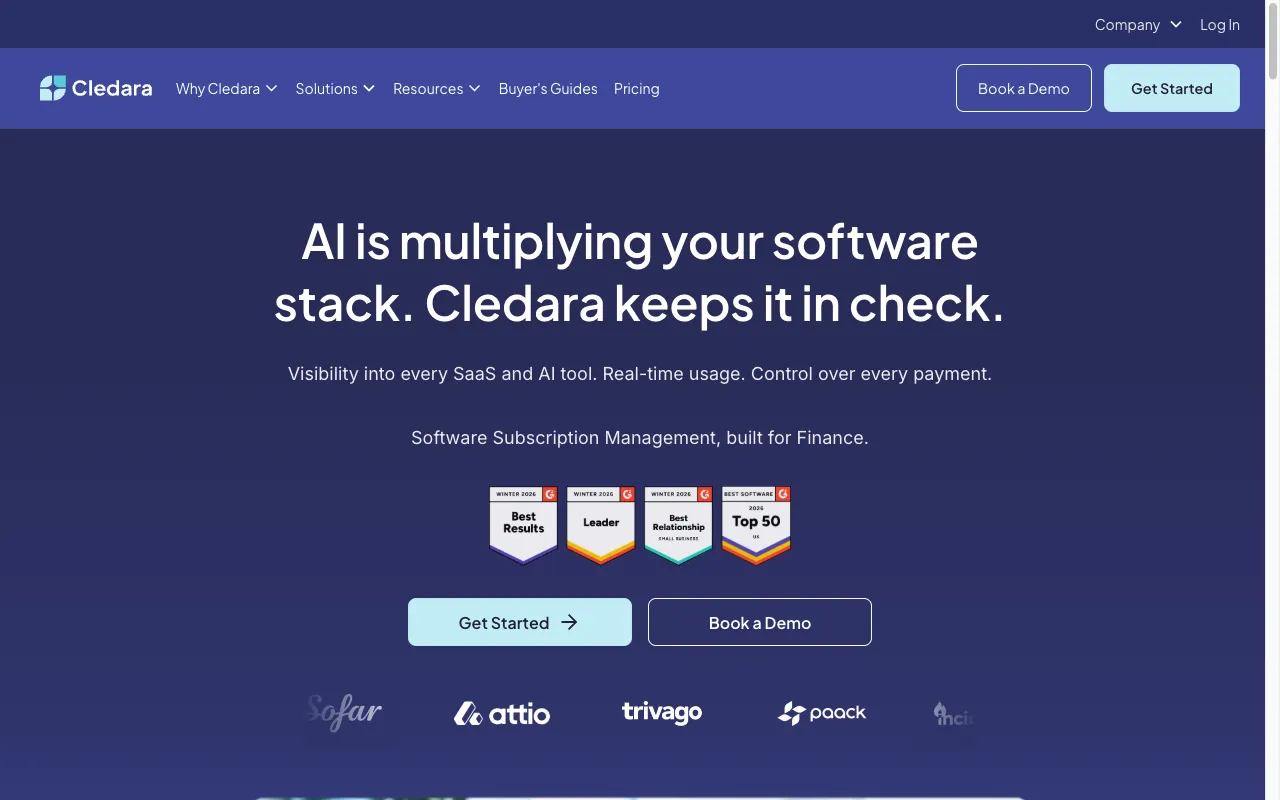
Cledara is built around issuing a virtual card per subscription. That design gives it genuinely strong controls: hard spend limits per tool, one-click cancellation, and clean real-time spend data for anything routed through its cards. It pairs that with a software directory, renewal alerts, invoice capture, and accounting reconciliation (Xero, QuickBooks, NetSuite).
The trade-off is architectural. Cledara is strongest when your SaaS spend actually runs through its cards. Subscriptions billed by invoice or ACH are captured through additional workflows such as email capture, accounting integrations, or manual entry, so buyers paying lots of large contracts by invoice should confirm how that spend is tracked during evaluation. Its AI features, a renewal and negotiation copilot plus pricing benchmarks, sit in a paid add-on rather than the base plan.
Pricing (as of June 2026): A card-led model with plans spanning roughly £75–£500/month across tiers, based on third-party and previously published figures; AI and benchmarking sit in an additional module. Cledara does not currently list every tier publicly, so confirm directly.
If you're weighing Cledara or hunting for a Cledara alternative, the payment-model question is usually what decides it: do you want to route spend through virtual cards, or track it however you already pay?
Choose Cledara over SaveMySaaS if card-level spend enforcement is your priority and you're willing to route payments through it. Choose SaveMySaaS if you want payment-agnostic tracking, core AI vendor intelligence, and an agent-ready API without changing your payment rails.
3. Substly: best for automatic SaaS discovery
Best for: SMBs (roughly 25–250 employees) whose main problem is finding what they're paying for and trimming unused licenses.
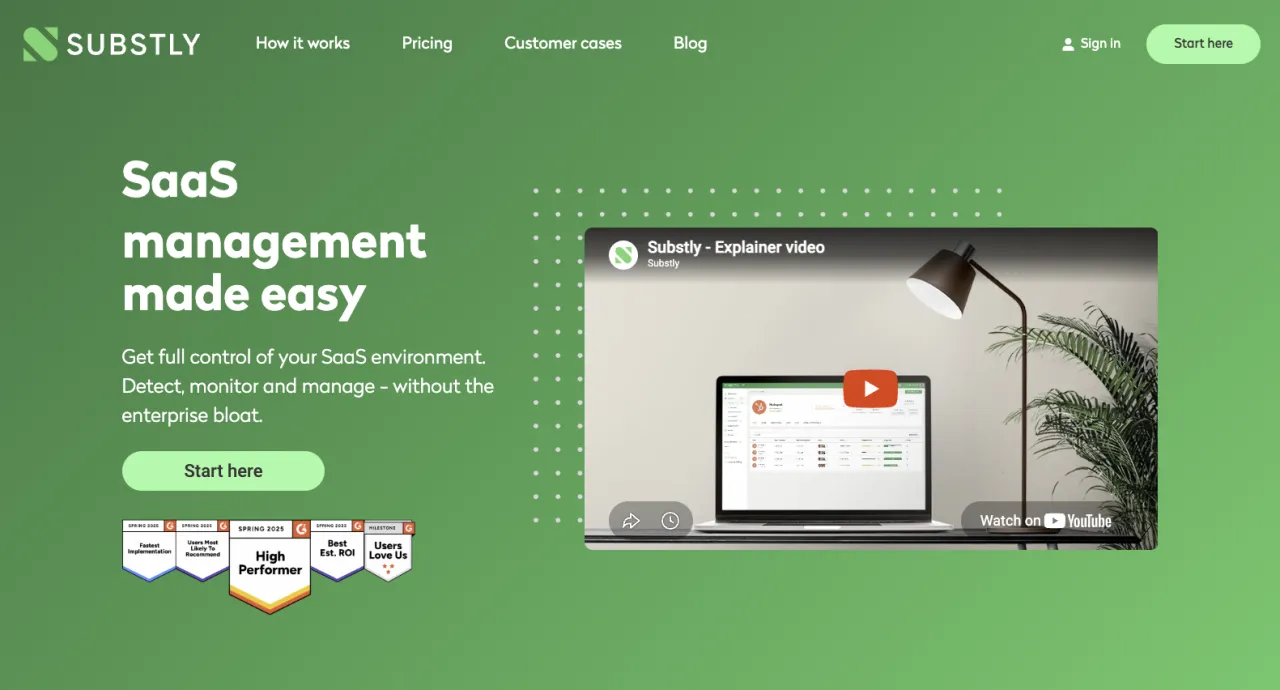
Substly is the closest "lean SaaS management for SMBs" tool to SaveMySaaS in spirit, and it's the strongest discovery player on this list for a small-team budget. It combines directory and SSO sync (Google Workspace, Microsoft Entra ID), a browser extension, and accounting integrations to surface shadow IT and usage automatically, alongside license optimization, employee offboarding, and renewal alerts. Pricing is fully transparent, which we respect.
Where it stops short of SaveMySaaS: Substly doesn't emphasize AI-driven vendor news and impact monitoring or AI spend analysis, and its public API is limited to the higher/enterprise tier, so there's nothing agent-facing for a self-serve customer.
Pricing (as of June 2026): Published, at about €95/month (Monitor) and €190/month (Optimize), billed yearly; a Custom tier is quote-based. A demo is available.
If you're comparing Substly or looking for a Substly alternative, the deciding question is whether automatic discovery or AI vendor intelligence matters more to you.
Choose Substly over SaveMySaaS if automatic discovery of shadow IT is your top priority. Choose SaveMySaaS if you already know your major tools and want AI vendor intelligence, spend analysis, and an agent-ready API.
4. NachoNacho: best for startup discounts + virtual cards
Best for: Startups, agencies, and SMBs that want to buy SaaS at a discount and manage it with virtual cards.
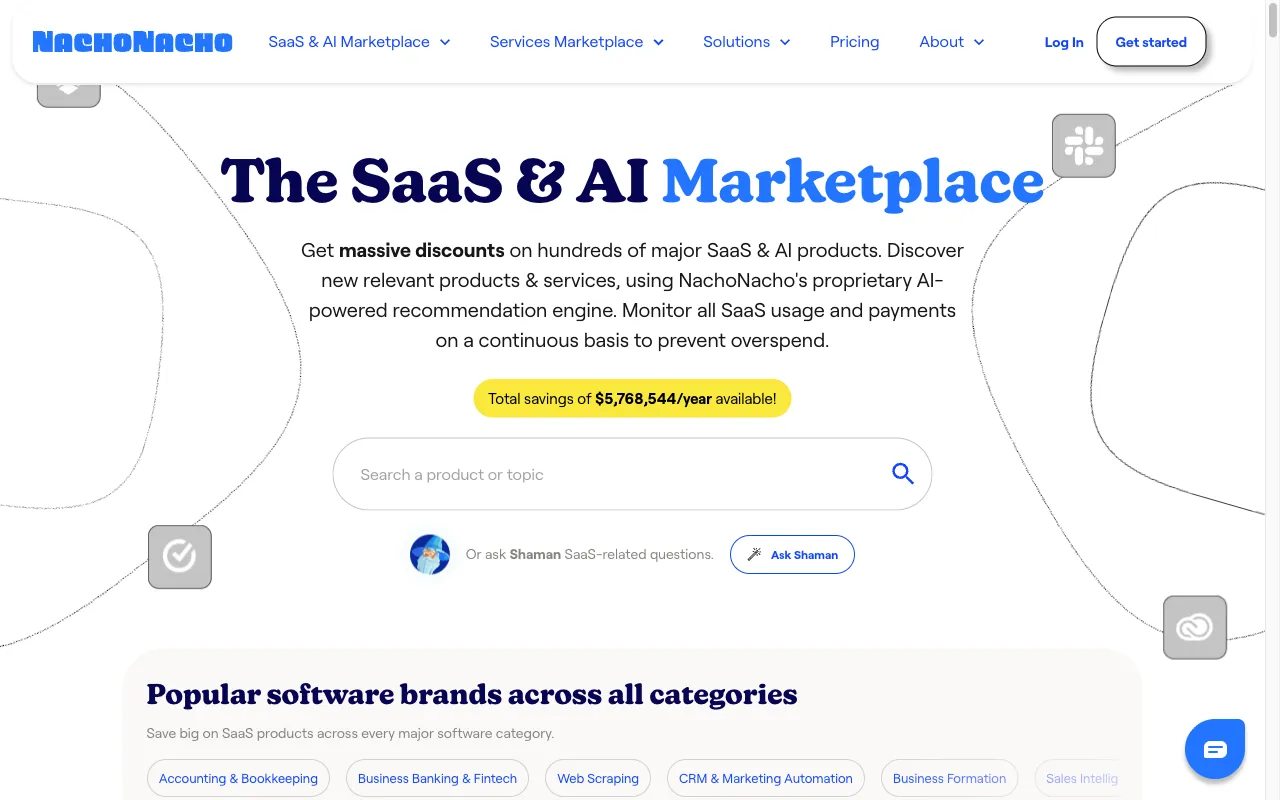
NachoNacho is really a SaaS discount marketplace with spend management layered on top. You get hundreds of software deals, a virtual card per vendor (with limits and one-click cancel), and a free monitoring tool ("Sherlock") that surfaces subscriptions from connected sources like Google Workspace, bank, or QuickBooks. Its free entry tier and direct dollar savings make it a favorite with founders.
As a dedicated renewal-tracking or vendor-intelligence tool it's a weaker fit. Renewal tracking isn't its headline use case, and its AI leans toward product recommendations (which, fairly, are tied to a monetized marketplace) rather than renewal strategy or vendor-news monitoring.
Pricing (as of June 2026): Published and transparent: a free Basic tier, Basic Plus at $129/year, and Premium at $129/year plus $10/user/month for cards and the spend dashboard.
Choose NachoNacho if discounts and virtual-card purchasing are the goal. Choose SaveMySaaS if renewal intelligence and vendor monitoring matter more than marketplace deals.
5. Spendbase: best for hands-off, human-led negotiation (SMB)
Best for: SMB and mid-market tech teams that want experts to negotiate for them and are comfortable with a success-fee model.
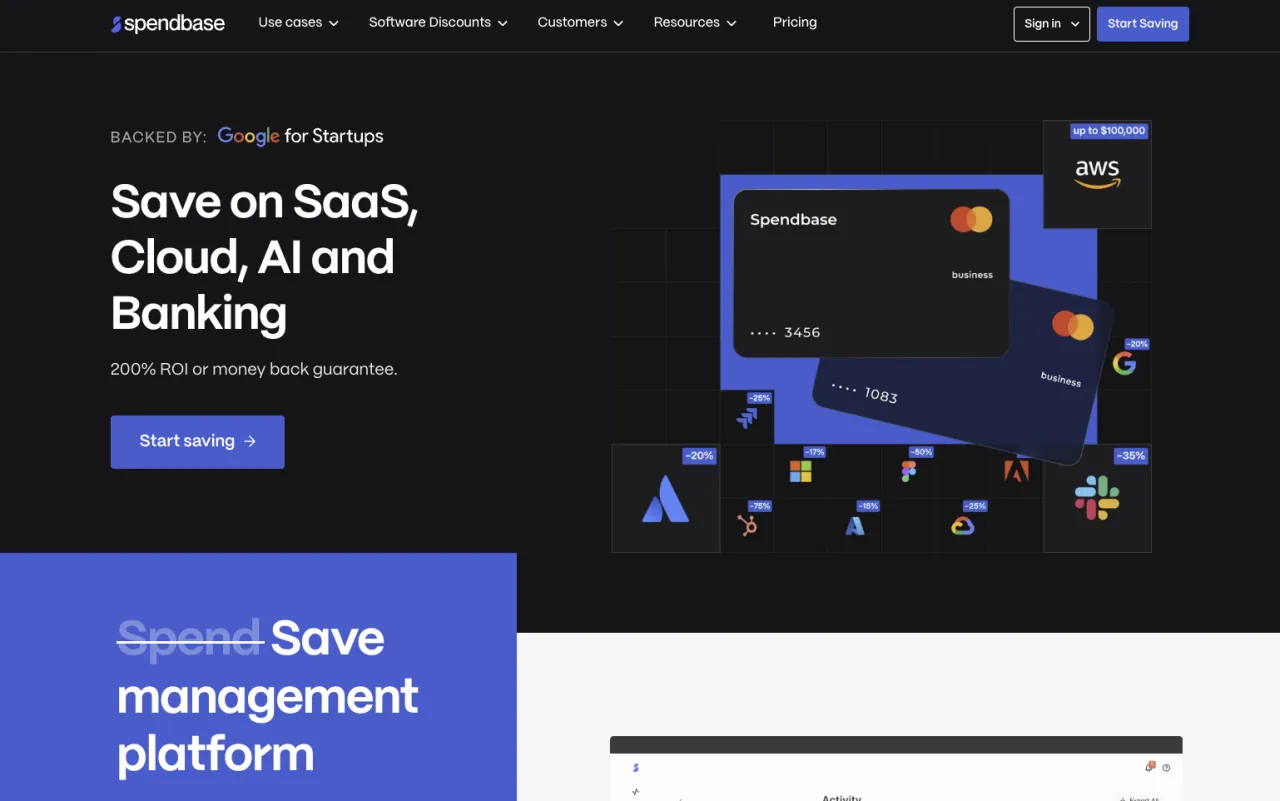
Spendbase combines SaaS and cloud spend management with an expert human negotiation team and an optional banking and virtual-card layer. Its standout is the managed negotiation service, so you don't need internal procurement muscle, and the commercial model is success-based. Its negotiation service is typically compensated via a percentage of the savings it realizes for you (public materials at the time of writing reference around 25%; confirm current terms and how savings are calculated). SaaS tracking itself doesn't require connecting a bank or card.
The gaps versus SaveMySaaS: its intelligence is delivered by people rather than a self-serve AI layer you can query, there's no public agent-facing API, and the managed-platform pricing is deposit and quote-based rather than published.
Pricing (as of June 2026): A genuinely free banking and cards tier; the managed spend platform is deposit and quote-based; negotiation is a success fee on realized savings.
Choose Spendbase if you want outsourced negotiation and don't mind a success-fee model. Choose SaveMySaaS if you'd rather keep negotiations in-house with AI guidance, pay nothing, and own the vendor relationship directly.
6. Spendflo: best for mid-market managed procurement
Best for: Mid-market companies with a formal procurement function, larger SaaS budgets, and appetite for managed negotiation. (Included as a mid-market reference point, not a typical 20–100-person SMB tool.)
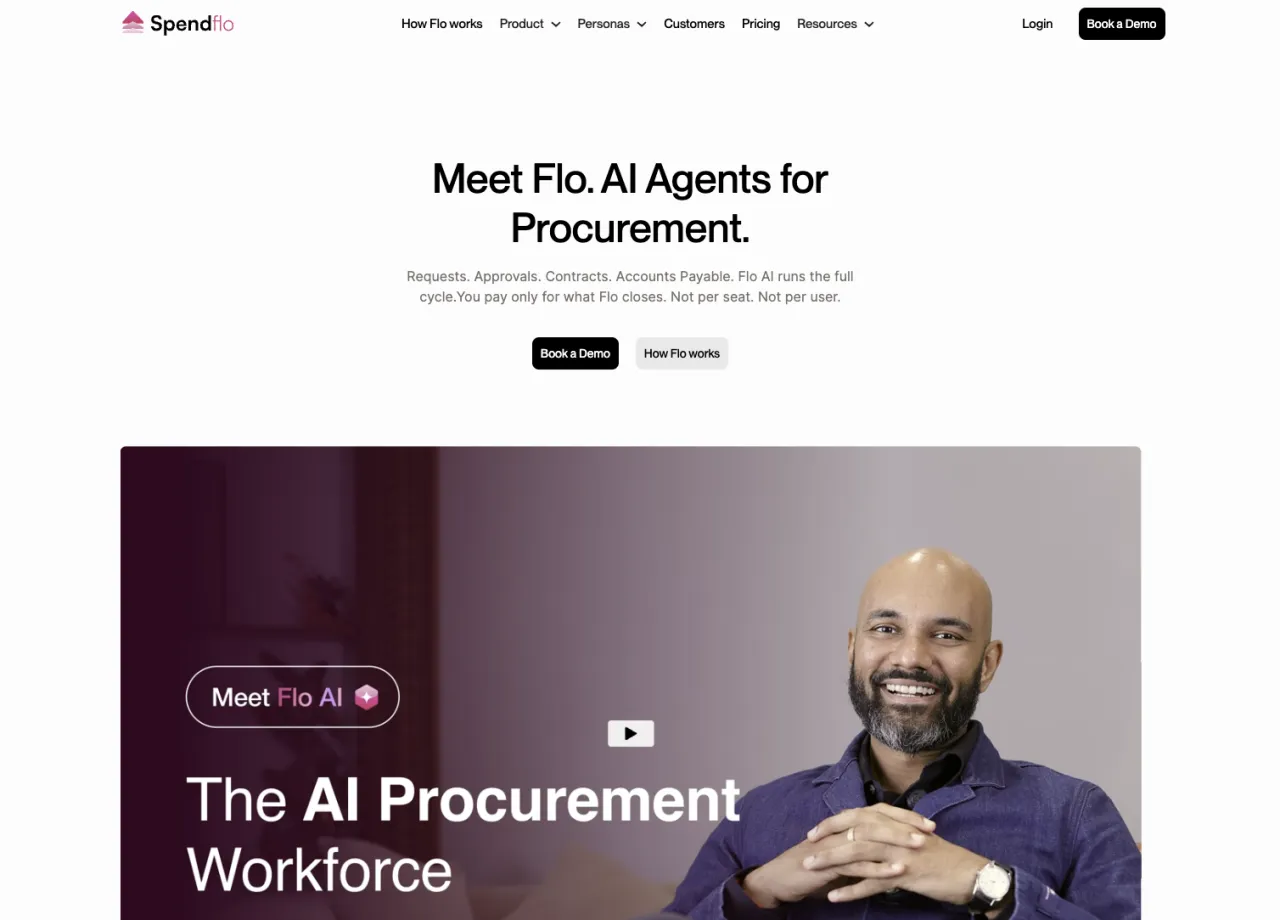
Spendflo is an AI-native intake-to-pay procurement platform with managed services: guided intake, approval workflows, contract management, vendor benchmarks, and a managed negotiation team, now fronted by a set of AI procurement agents ("Flo AI," launched mid-2026). For a larger team drowning in purchase requests and renewals, it's powerful.
It's the priciest and heaviest option here by design. Pricing is quote-only (third-party reports place it in the five-figure annual range), it requires an annual commitment and a 2–4 week onboarding, and its AI works inside Spendflo's own workflow rather than as an open API your tools can call. That's exactly why it belongs in the "graduate to this later" tier rather than next to free, self-serve SMB tools.
Pricing (as of June 2026): Quote-only; no public self-serve plan.
Choose Spendflo if you're mid-market with formal procurement needs. Choose SaveMySaaS if you're a lean team that wants renewal intelligence and AI insight without a managed-services contract.
The "no automatic discovery" question: read this before you decide
Let's be direct about SaveMySaaS's biggest limitation, because it's the one most likely to matter. SaveMySaaS does not automatically discover shadow IT, and it deliberately does not connect to your email. There's no inbox integration, no SSO crawl, no bank or accounting feed. You add subscriptions by forwarding the specific renewal emails you choose, uploading a contract for AI extraction, or entering them manually.
That's a real gap if your #1 problem is "I have no idea what we're paying for." For that job, Substly, Cledara, or an enterprise platform is a better first evaluation.
It is, however, a deliberate design choice, and the reasoning matters:
- No email connection, on purpose. Most tools in this category want to plug into your inbox. We don't, and that's a choice rather than a missing feature. Your email is the backbone of your digital life and the recovery route into nearly every other account you own, so granting any application standing read-access to it introduces real, and routinely underestimated, risk. We chose to leave that door shut. You forward the renewal emails you want tracked, and nothing else ever crosses over. Nothing else in your inbox is scanned, stored, or mined.
- A deliberately clean stack means sharper insights. Because every contract enters on purpose instead of being vacuumed in automatically, your inventory stays lean and intentional. You track the subscriptions that actually matter, not a cluttered list padded with abandoned trials, personal logins, and tools nobody has opened in a year. That precision is exactly what lets the AI hand back realistic, practical recommendations rather than an analysis of a noisy, half-accurate inventory.
- It covers the contracts that matter most. The big, invoice-billed annual renewals, the ones with real negotiation leverage, are often the ones that card- and feed-based discovery handles least cleanly. Forwarding those is fast and complete.
Manual entry also doesn't have to mean manual labor, and this is where the agent-ready API earns its keep. Instead of adding and removing vendors and contracts by hand, you can hand that upkeep to an AI agent (Claude, ChatGPT, Cursor, or a script of your own) through scoped tokens you control. The API does the routine work, so you keep the privacy of a no-integration model without the busywork that usually comes with it.
In practice, most teams get the bulk of their stack in within an hour by forwarding existing invoices and renewal emails, and you can set up a simple inbox rule so future invoices forward themselves. Think of it as intentional discovery (the subscriptions you choose to track, in depth) rather than exhaustive discovery (every app, automatically). Pick the job that matches your actual pain.
What about the enterprise platforms? (Zylo, Torii, Productiv, Zluri, BetterCloud)
These are excellent products, just built for a different buyer. They're typically quote-based, sold as five-figure-plus annual contracts, and designed for organizations with hundreds to tens of thousands of employees, often requiring SSO, identity-governance setup, usage agents, or multi-week implementations and a dedicated IT or procurement owner to run them. By their own positioning, several only make financial sense once you're managing millions in SaaS spend.
That's not a knock on the products. If you're a 2,000-person company drowning in shadow IT, Zylo, Torii, Productiv, Zluri, and BetterCloud are the right tools to evaluate. We left them off the main list because ranking a $30k+ enterprise platform against free, self-serve SMB tools would be apples-to-oranges, not because they're inferior. If you're under roughly 500 employees, start with the accessible tools above.
Also considered but not ranked here: managed-negotiation services like Vendr, Tropic, and Sastrify (mid-market, quote-based), plus earlier-stage tools that didn't have current, reliably accessible public product or pricing information at the time of review. We focused this list on tools a lean team can evaluate and implement on its own.
FAQ
Can I connect these tools to AI assistants like Claude or ChatGPT? Among the tools reviewed, SaveMySaaS is the only one with a public, self-serve REST API (personal access tokens plus scopes) explicitly designed for AI agents, so assistants like Claude, ChatGPT, or Cursor can read renewals and manage contracts on your behalf.
Does SaveMySaaS connect to or read my email? No. SaveMySaaS has no inbox integration and never reads your email. You forward the specific renewal emails you want tracked, or upload and enter contracts yourself, so nothing else in your inbox is accessed, scanned, or stored. It's a deliberate privacy choice: your email is the gateway to most of your other accounts, and we'd rather not become another app with standing access to it. Keeping entry manual also keeps your stack lean, which means sharper insights, and the agent-ready API handles the routine work of adding and removing vendors and contracts so the manual model stays low-effort.
Which SaaS management tool tracks invoice-billed subscriptions without virtual cards? SaveMySaaS tracks subscriptions billed by invoice, ACH, or bank transfer without requiring you to route payments through virtual cards. You forward or upload the contract and it's tracked. That's the gap card-led tools handle least cleanly, since the largest annual contracts are often invoice-billed and fall outside a card model unless you add them by hand.
Back to: Part 1: Best SaaS Management Tools for SMBs, The Decision Guide
Last updated June 17, 2026. Pricing and features were verified against public vendor sources at the time of writing and may have changed, so always confirm on the vendor's own site. SaveMySaaS publishes this comparison and is one of the tools featured; we've aimed for an accurate, fair assessment and welcome corrections.